What is massage therapy training in Glasgow?
Two therapists can learn the same stretch and get very different results. The difference usually starts with their training. Massage therapy training in Glasgow runs from short introductory courses to Level 3 and Level 4 diplomas.
That matters if you’re hoping to qualify yourself. It matters just as much if you’re deciding who to trust with a sore back, shoulder, neck or hip.
Most courses spend their hours on technique, and sports massage courses more than most. Far less time goes on contraindications, the conditions where massage isn’t safe, or needs medical clearance first.
Even less time goes on how to refer a client on to someone else, and that gap is what this page is about.
Glasgow Thai Massage is a treatment studio in the city centre, not a course provider. We see what good screening and poor screening look like from the treatment-room side. If you’d like to feel that difference for yourself, book your session today.
What does massage therapist training teach beyond technique?
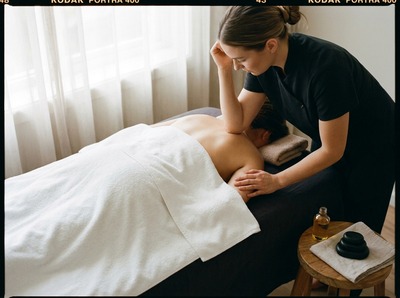
Good training answers three questions: where do I work, how firmly, and should I work at all?
It’s the third question that most syllabuses hurry past.
Contraindications come in three types: absolute, local and relative, and each calls for a different response. A bruise or an open sore, for example, simply means working around one small area.
Other conditions mean no massage at all until a GP agrees. Deep vein thrombosis is one of them, and the calf pain it causes can feel a lot like an ordinary tight muscle.
Strong training leaves a therapist able to:
- Find the tight muscle precisely, so the pressure lands where it helps
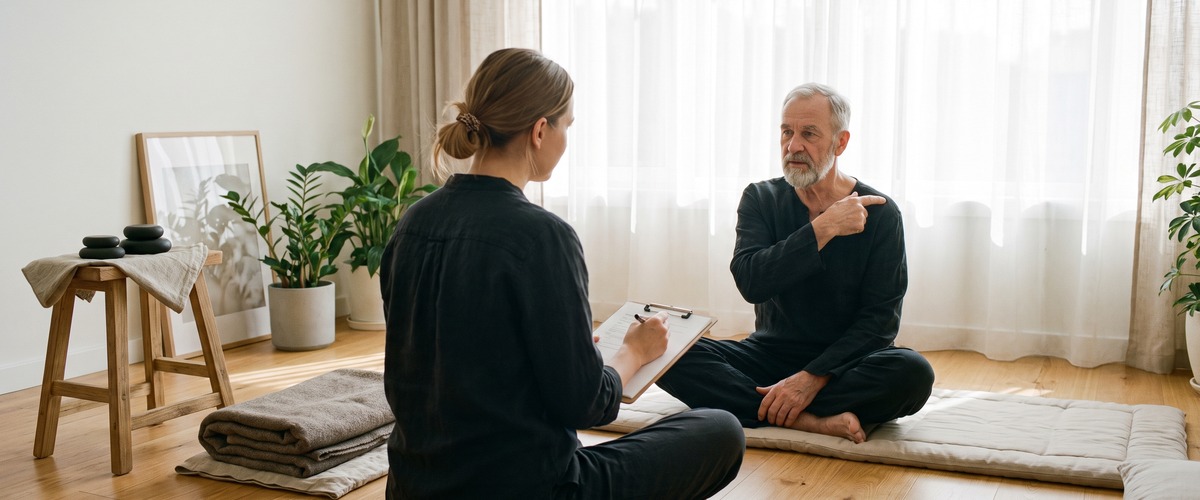
- Ask about your health history before every session, not only the first
- Work around local issues such as bruises, burns and open sores
- Spot when you need a GP or physiotherapist before any massage
- Give the pressure you ask for, and change it mid-session
- Explain each step, so you always know what’s coming
New therapists are usually told to collect more techniques, but in our experience that misses the point. The safest pair of hands belongs to the therapist who knows when to stop.
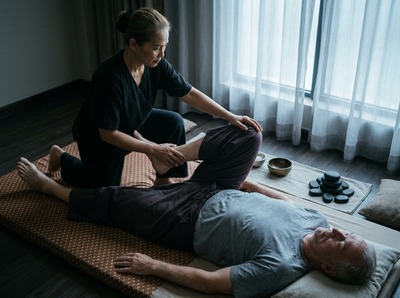
Maliwan asks about your health history at the start of every session, not only the first, because bodies change between visits. Two or three times a year, that question changes everything, and someone is sent to their GP before any hands-on work begins. If that’s the standard you’re looking for, we’d be glad to welcome you in.
You can feel the precision. One reviewer said Maliwan “knew exactly where to apply pressure and how to release tension without ever causing discomfort.” Another client, Emily K., had a shoulder injury that three physios, a surgeon and steroid injections hadn’t shifted. The day after her deep-tissue Thai session, she was pain-free and moving freely.
Maliwan is clear about where the line falls. Physiotherapy is right for an actual injury, while Thai massage is for chronic tension and for maintenance once you’ve recovered.
Traditional Thai massage and sports massage skills
Traditional Thai massage brings together acupressure, assisted stretching and sen line work, which together release tension and improve your range of motion. Sports massage, by contrast, aims at muscle recovery.
Deep tissue work targets the deeper layers of muscle and fascia. Both depend on the same screening habits, and the Thai sports massage we offer follows them.
Who should choose massage therapy courses in Glasgow City?
Ask every provider two questions. How many hours go on contraindications and referral? And will the certificate get you insured?

If you’re looking in Glasgow, options include accredited diplomas from the Glasgow School of Massage and the Scottish Therapy Academy.
Clients benefit from asking the same sort of thing. A therapist who checks your history before touching lower back pain or sciatica is showing you the training that matters most. Maliwan once worked with a client who had sciatica for eighteen months.
Over four sessions across two months, the tightness pinching the nerve eased. Now they come every six weeks to keep it away.
What should you expect from a session with a trained therapist?
A 60-minute session starts with questions about your health and the sore area. Then the hands-on work begins. Traditional Thai massage happens on a mat, fully clothed in loose clothing.
Oil massage happens on a table. You undress to your underwear, and your privacy is kept throughout.
Set your pressure expectations at the start. A 60-minute Traditional Thai Massage or Thai Mid-Deep Tissue Oil Massage costs £60. You can book your session online once you have chosen.
Why choose Glasgow Thai Massage?
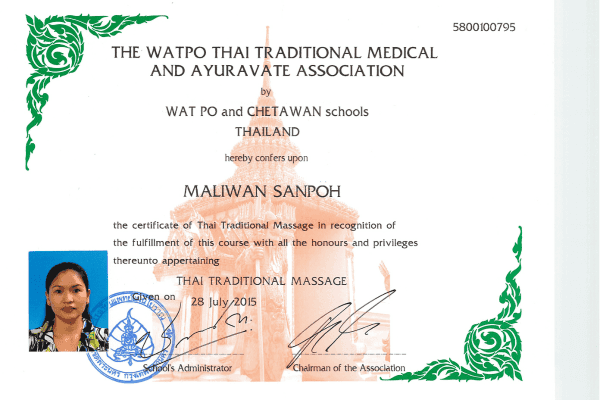
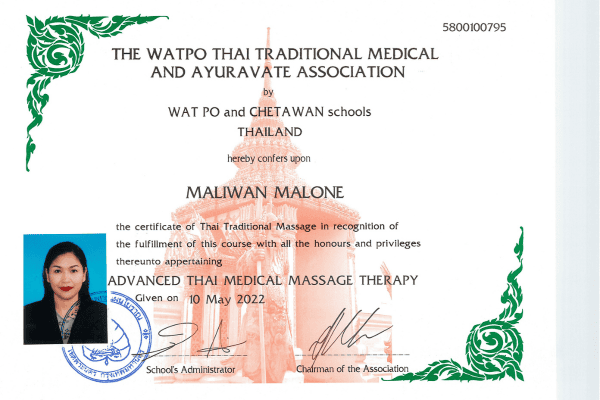
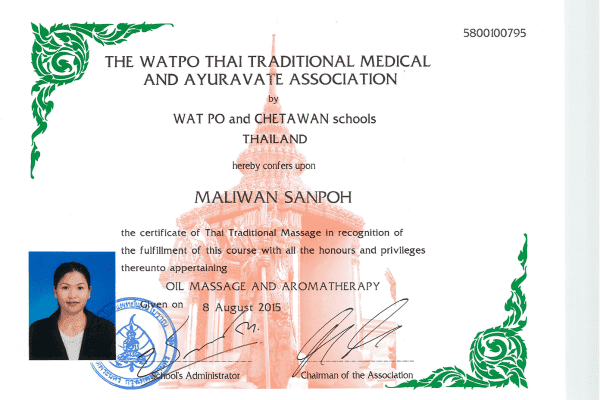
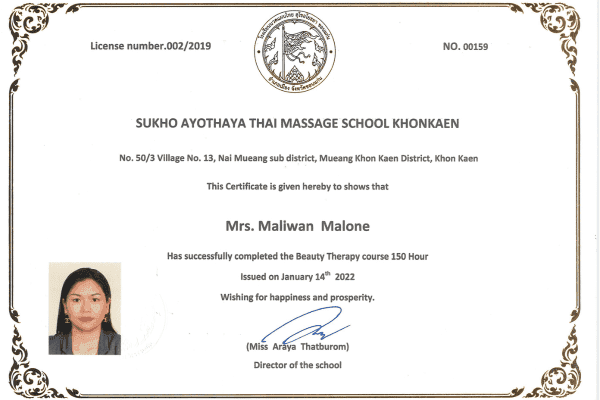
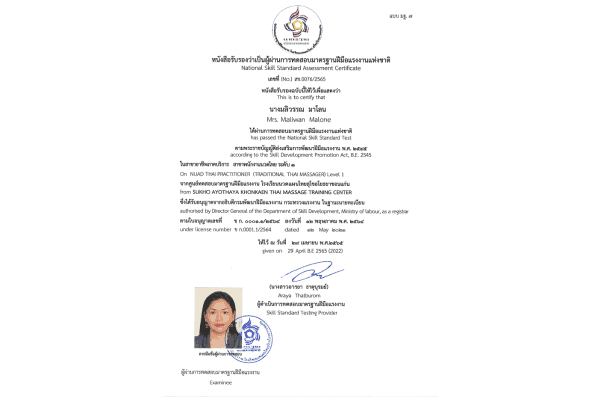
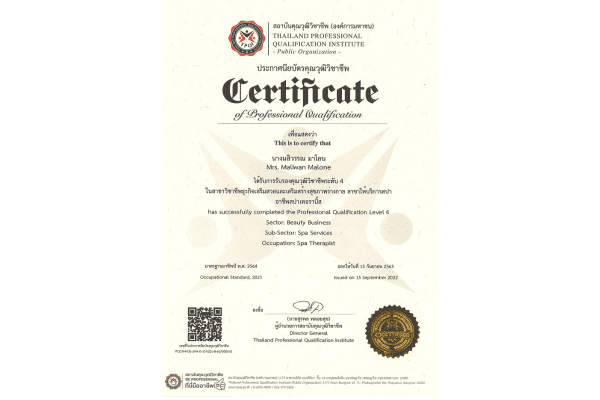
Glasgow Thai Massage is a traditional Thai massage studio in Glasgow city centre. We offer authentic Thai massage, deep tissue and sports massage from experienced therapists. Owner and head therapist Maliwan Malone has over 20 years of practice.
Her training was at Wat Pho Thai Massage School in Bangkok.
We are on West Nile Street, near Buchanan Street subway, and rated 4.9 stars by clients. Read about Maliwan and our team, see all our treatments, or book a 60-minute appointment with a therapist who screens first and treats second.