Thai Massage for Chefs and Kitchen Staff
Thai massage for chefs addresses something most massage pages don’t name: the specific, overlapping strain that professional kitchen work creates. It isn’t one sore shoulder from one bad week. It’s feet compressed against hard tiled floors across a ten-hour or twelve-hour shift, developing plantar tension and heel pain that rest alone doesn’t clear. It’s the forearm and wrist load that builds through hundreds of knife strokes, pan lifts, and grip repetitions per service, producing the kind of tendon tightness that sits somewhere between carpal tunnel and tennis elbow and rarely gets named at all. It’s the forward-flexed neck and hunched prep posture held for hours over a counter that is almost never at quite the right height. Glasgow Thai Massage works with all three of those patterns, not just the one that happens to hurt most on your day off.
Research confirms what kitchen workers already know in their bodies. Over 65% of kitchen staff report lower back pain as a persistent complaint; for head chefs that figure rises to nearly 80%. Wrist and forearm problems from repetitive gripping and cutting, plantar fasciitis from hard-floor standing, and shoulder strain from counter heights that force a raised, asymmetric posture are the rest of the occupational picture.
That combination calls for bodywork that follows the whole pattern, not a generic hour of relaxation that misses the foot-and-forearm damage entirely. Book a session when your body has been telling you the same thing for a few weeks.
How Traditional Thai Massage Helps Kitchen Workers
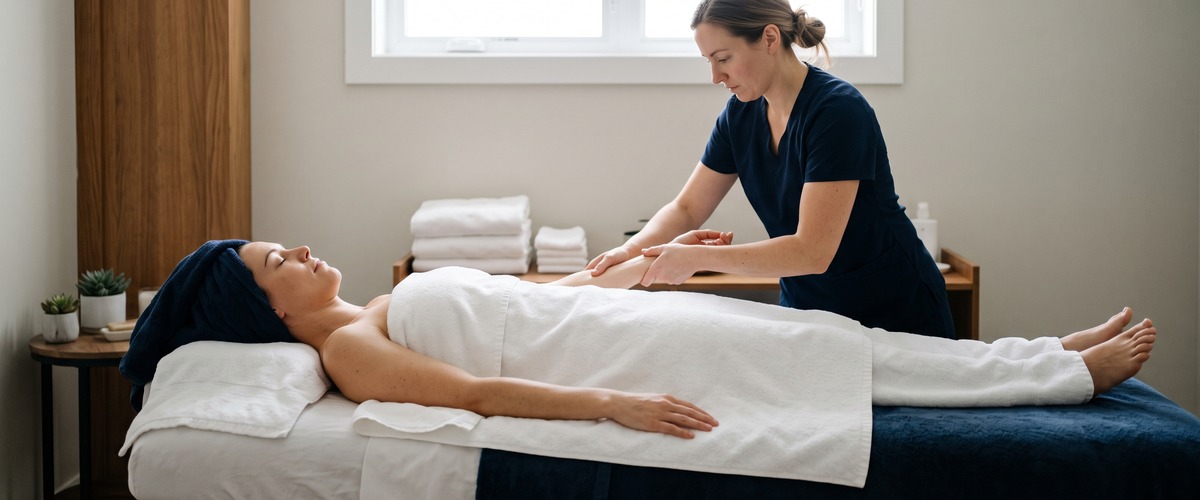
Traditional Thai massage, a technique using acupressure, assisted stretching, and compression work along the body’s sen energy lines, suits the kitchen worker’s strain pattern in a way that standard table massage doesn’t. It addresses the whole kinetic chain from the feet upward: releasing plantar and lower leg tension from hard-floor standing, working through the lower back, and following the restriction up through the shoulder and into the neck where prep posture accumulates.
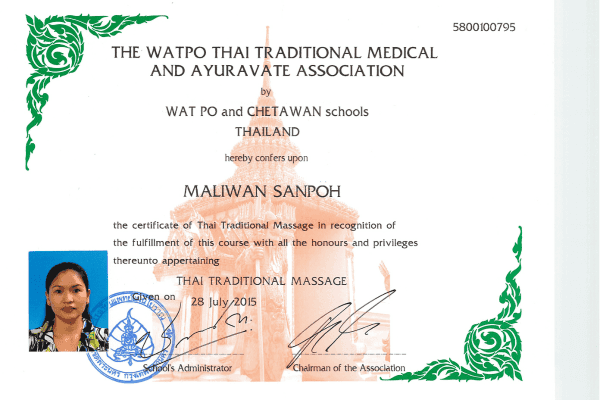
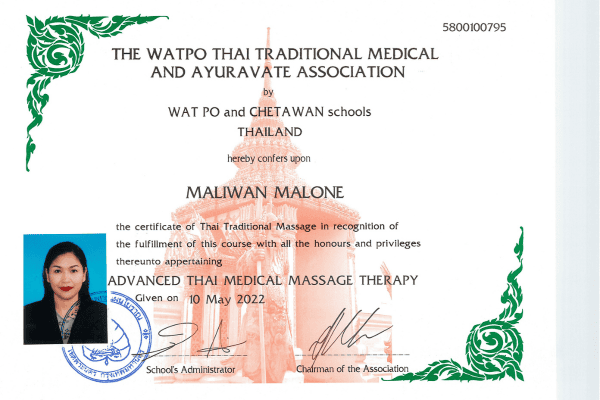
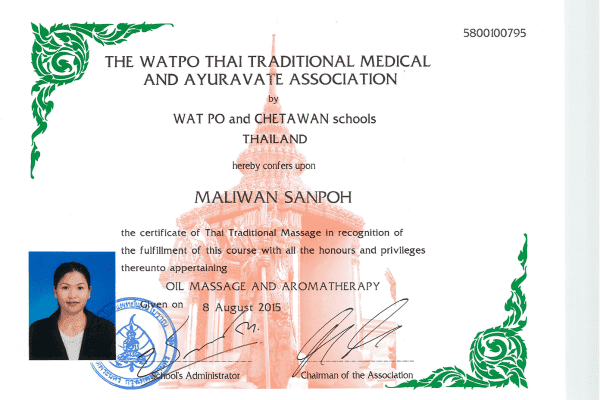
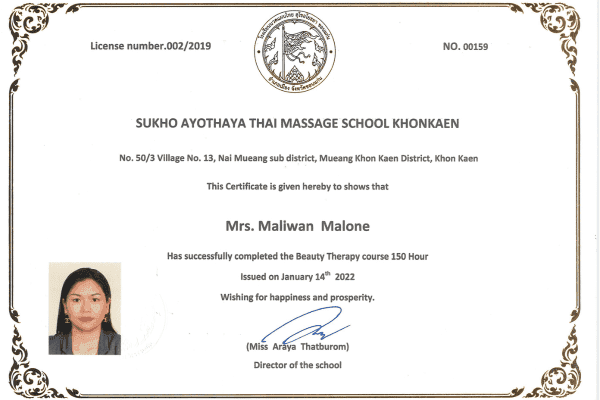
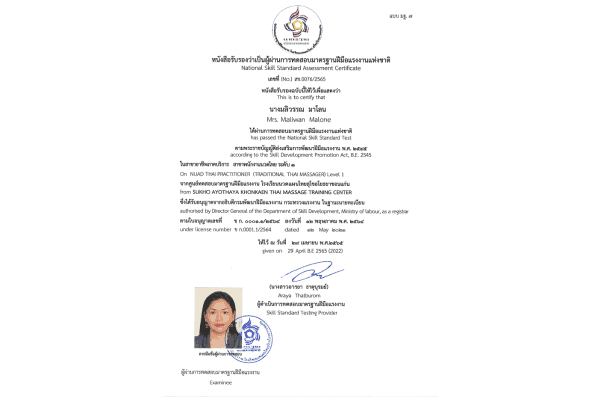
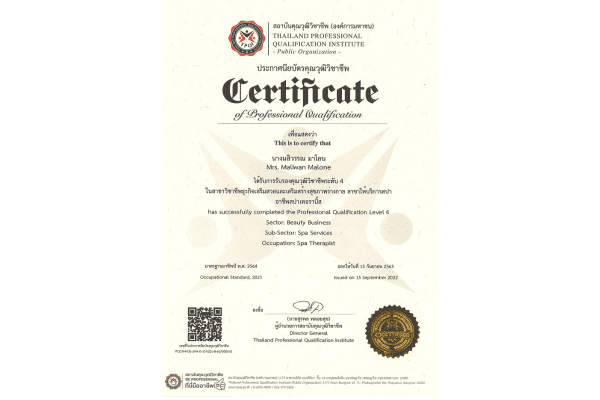
Maliwan, Glasgow Thai Massage’s head therapist with over 20 years of practice trained at Wat Pho Thai Massage School in Bangkok, finds that clients in physically demanding jobs arrive with tension in places they haven’t connected to their work. As Maliwan explains: “Someone comes in saying their neck is bad, and when I work through the session I find the restriction is coming from the forearm and through the shoulder. It’s a chain. You have to follow it.”
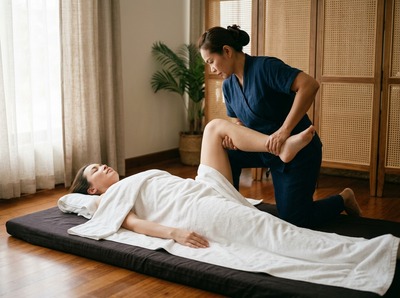
For kitchen workers, that chain runs from the wrist grip on the knife handle all the way to the upper trapezius, and no single point in it heals in isolation.
That observation shows up in real sessions. Lois L., who came in after working 12-hour days with shoulders so sore she could barely lift them, found the soreness had “miraculously disappeared” after her first treatment. For someone in a kitchen, that isn’t just personal relief: it’s the difference between getting back on the line the next day at full capacity and spending the service protecting an arm that hasn’t recovered.
Recommended treatments for kitchen professionals:
- Thai Foot Massage — a reflexology-based treatment working the feet and lower legs; the most direct response to long shifts on hard floors. Most kitchen workers who try it come back for it regularly.
- Traditional Thai Massage — full-body work addressing the whole postural pattern: plantar tension, lower back, upper back, neck, and the shoulder-to-wrist chain from repetitive knife and pan work.
- Thai Sports Massage — targeted at specific areas of repetitive-use tension, well suited to kitchen workers managing forearm tendinitis or wrist strain between shifts.
- Thai Oil Massage — combines therapeutic techniques with heated oil; a good choice on days off when the body needs to fully decompress rather than do structural work.
Thai Massage Therapy for Glasgow’s Hospitality Workers
Glasgow’s kitchen workforce carries a particular pressure right now. The city’s hospitality sector has absorbed the double hit of the pandemic and Brexit-era recruitment shortfalls, and those who stayed in the industry have taken on more covers and longer output than the profession expected a few years ago.
The community around Glasgow’s restaurant kitchens is close-knit and physically resilient by necessity. Regular bodywork is part of how that resilience holds, not a treat bolted onto the side of a busy schedule.
Glasgow Thai Massage is at Victoria Chambers, 142 West Nile Street, in Glasgow City Centre, close to Buchanan Street subway station and within easy reach of the city’s main restaurant and hotel districts. Whether you have a full day off between doubles, a late morning before a dinner service, or an evening slot after the last covers, book your appointment online and the session is confirmed immediately.
The studio is a short walk from Merchant City and the central hospitality cluster, so you are not adding travel time onto an already short window between shifts. Glasgow Thai Massage is a small, Maliwan-led practice where the standard of technique is consistent across the team, and all treatments are delivered by therapists trained to the same standard. The practice holds a 4.9-star rating from client reviews, with the most regular returners tending to be the people who use their bodies hardest for a living.